
|
|
| Home > BS EN1155 | CE MARKING |
The CE marking (also known as CE mark) is a mandatory conformity mark on many products placed on the single market in the European Economic Area (EEA). The CE marking certifies that a product has met EU health, safety, and environmental requirements, which ensure consumer safety.
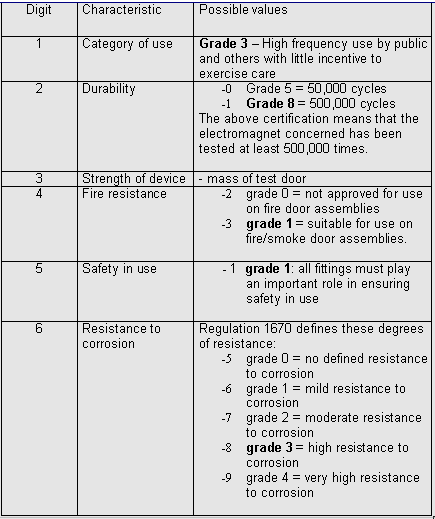
The Opera magnetic door retainers are CE marked in accordance with the EN 1155; the marking indicates the classification: Examples for door hold-open magnets:
The various numbers have the following meaning:
|
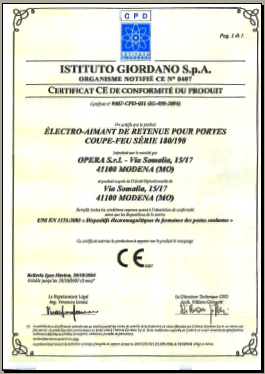
Opera has been the first European company to get the CE marking for the Magnetic door retainers according to the the BS EN1155 norm Download the CE certificate Pdf (63,00 Kb)
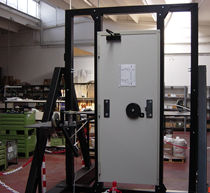
The testing room for the door retainer. Opera premises in Modena - Italy |